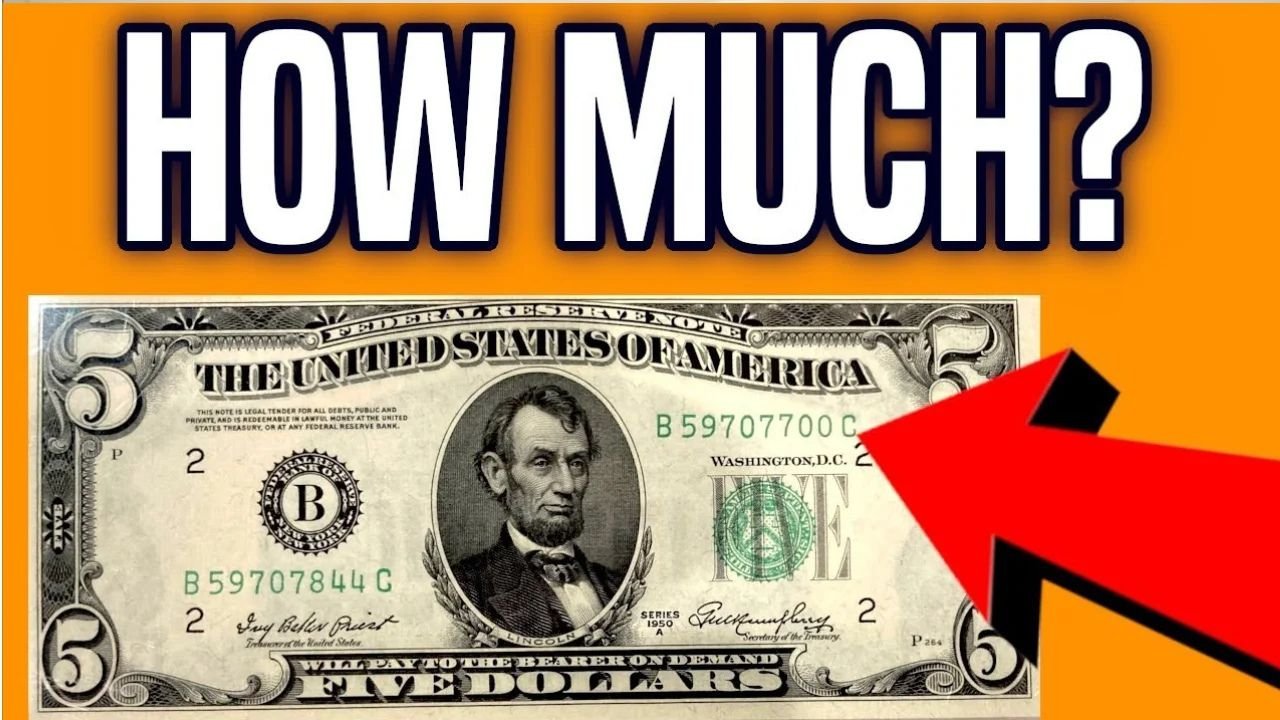
How to Identify a 1995 $5 Bill With an Upside-Down Seal: Have you ever thought the money in your wallet could be worth more than what’s printed on it? Sometimes, rare printing mistakes in banknotes can turn them into valuable collector’s items. One such example is the 1995 $5 bill with an upside-down seal. This isn’t just a fun curiosity—it can be worth hundreds or even thousands of dollars to the right collector.
Why Some 1995 $5 Bills Are Special
In 1995, a small printing error occurred on a limited number of $5 bills. The error involved the placement of the Department of the Treasury seal. Instead of being printed upright, the seal was accidentally printed upside down. While this may seem like a minor detail, collectors call these kinds of errors “misprints,” and they can make a bill extremely rare.
Understanding the Seal Misprint
On a regular $5 bill, the green Treasury seal is printed upright on the right side of the note. In the rare error version, this seal appears flipped upside down. This happened during the third stage of printing when the seal and serial numbers are added. If the paper sheet was inserted incorrectly in the printing press, the seal could end up inverted while the rest of the bill stayed normal.
How Rare Is the Upside-Down Seal?
These misprinted bills are rare because most printing errors are caught and destroyed by the Bureau of Engraving and Printing before they leave the facility. Only a small batch made it into circulation. Over time, many of these bills have been lost or damaged, which makes finding one today even more difficult—and more valuable.
How to Check if Your Bill Has the Error
If you have a $5 bill from 1995, hold it under good light and carefully look at the green Treasury seal. Compare it to a normal $5 bill and see if the top of the seal faces downward instead of upward. Make sure the rest of the bill looks normal, because some fake “error bills” are just regular bills with altered seals. Authentic errors will still have perfect printing alignment and matching serial numbers.
The Value of an Upside-Down Seal $5 Bill
The value depends on the bill’s condition and the demand from collectors. Crisp, uncirculated bills with the error can sell for far more than worn, folded ones. Here’s a general guide to how much these bills can be worth:
| Condition | Estimated Value Range |
|---|---|
| Heavily Circulated | $100 – $200 |
| Lightly Circulated | $250 – $500 |
| Uncirculated | $1,000 – $3,000+ |
Why Collectors Pay So Much
Collectors value rarity, historical significance, and unusual features. An upside-down seal meets all three criteria. It’s rare because only a small number were printed, historically interesting because it shows how even the strict U.S. currency printing process can have mistakes, and unusual enough to stand out in any collection.
How to Sell Your Rare $5 Bill
If you find one of these bills, you can sell it through online auction sites, currency dealers, or coin and currency shows. Before selling, it’s smart to have the bill professionally graded by a currency grading service. A graded bill with a certificate of authenticity will usually fetch a higher price.
Tips for Spotting Other Currency Errors
While the 1995 $5 bill with an upside-down seal is famous, other misprints also exist, such as misaligned serial numbers, missing seals, or double prints. If you start looking carefully at your cash, you might discover other rare and valuable notes.
FAQs
Q: How can I be sure my bill is real and not a fake?
A: Check for the same security features as a normal 1995 $5 bill, including the watermark, paper texture, and matching serial numbers. Consider having it authenticated by a reputable grading service.
Q: Are these bills still legal tender?
A: Yes, they can still be used as regular $5 bills, but that would be a waste because their collector value is much higher.
Q: Do newer $5 bills have similar errors?
A: Errors can happen in any year, but modern quality control makes them far less common.
Final Thoughts
Finding a 1995 $5 bill with an upside-down seal is like hitting a small jackpot. It’s proof that even in the highly controlled process of currency printing, human errors can slip through. If you have old cash lying around, take a closer look—you might be holding a rare piece of history worth far more than its face value.